Lint Roller
The one idea
Picks up what the AI shed.
Mags Olsen is a staff engineer in Minneapolis. She built Lint Roller on weekends to clean up after her own AI assistant, and nine thousand developers now use it. Her logo took an afternoon. She was about to charge teams for it, and it looked like every other developer tool: a dark page, a purple gradient, a hexagon and a rocket. She described the problem the same way every time: “It’s not broken. It’s just covered in fuzz.”
- Client
- Lint Roller: Mags Olsen, Minneapolis
- Brief
- Look like something a team will pay for, and still like something Mags made
- We made
- The mark, the pack, the used-sheet report, the docs, refill packs for release notes, stickers, a shirt, and a real roller
- Time
- Nine weeks
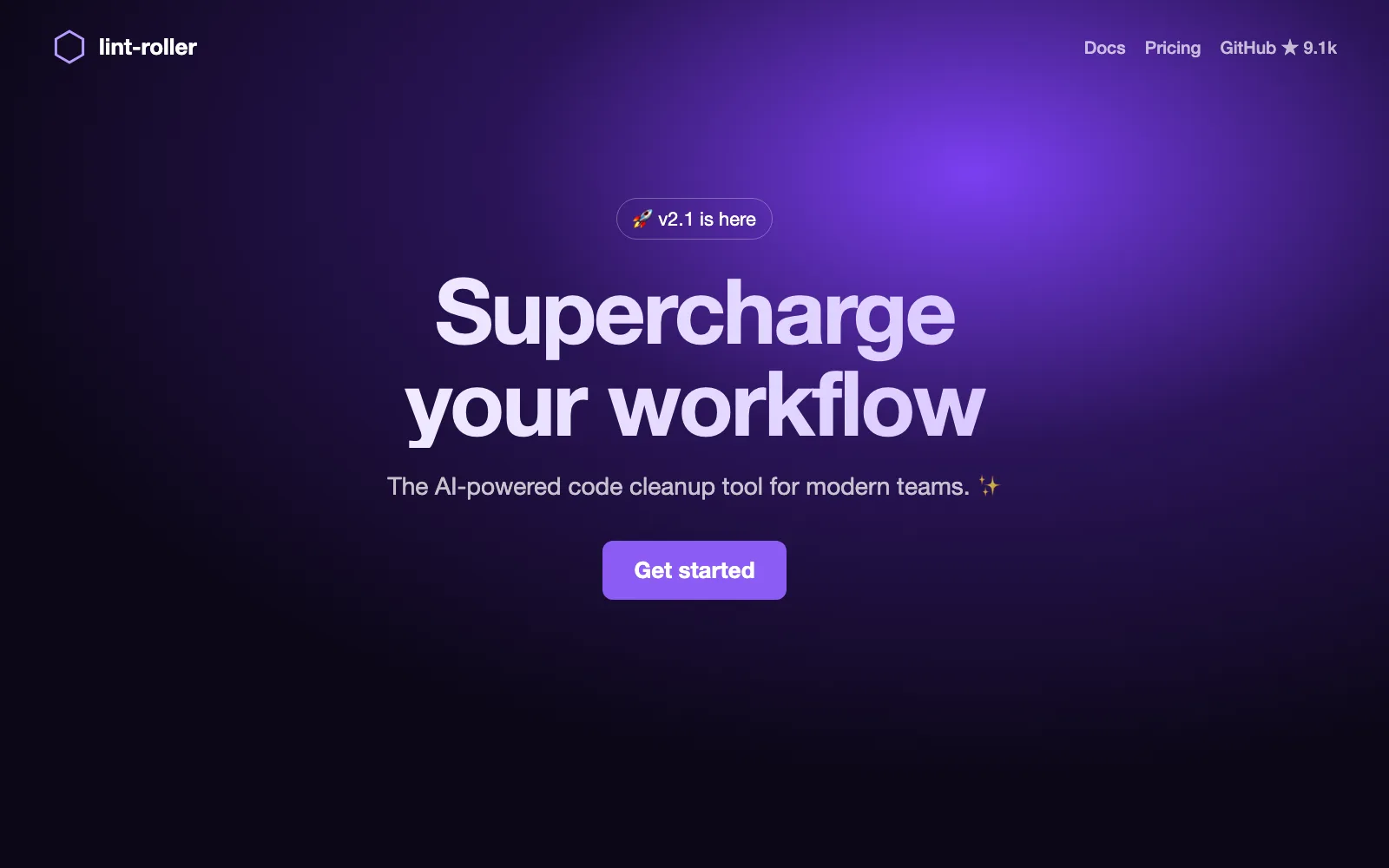
Built in a weekend. It worked, nine thousand people used it, and it looked like this.
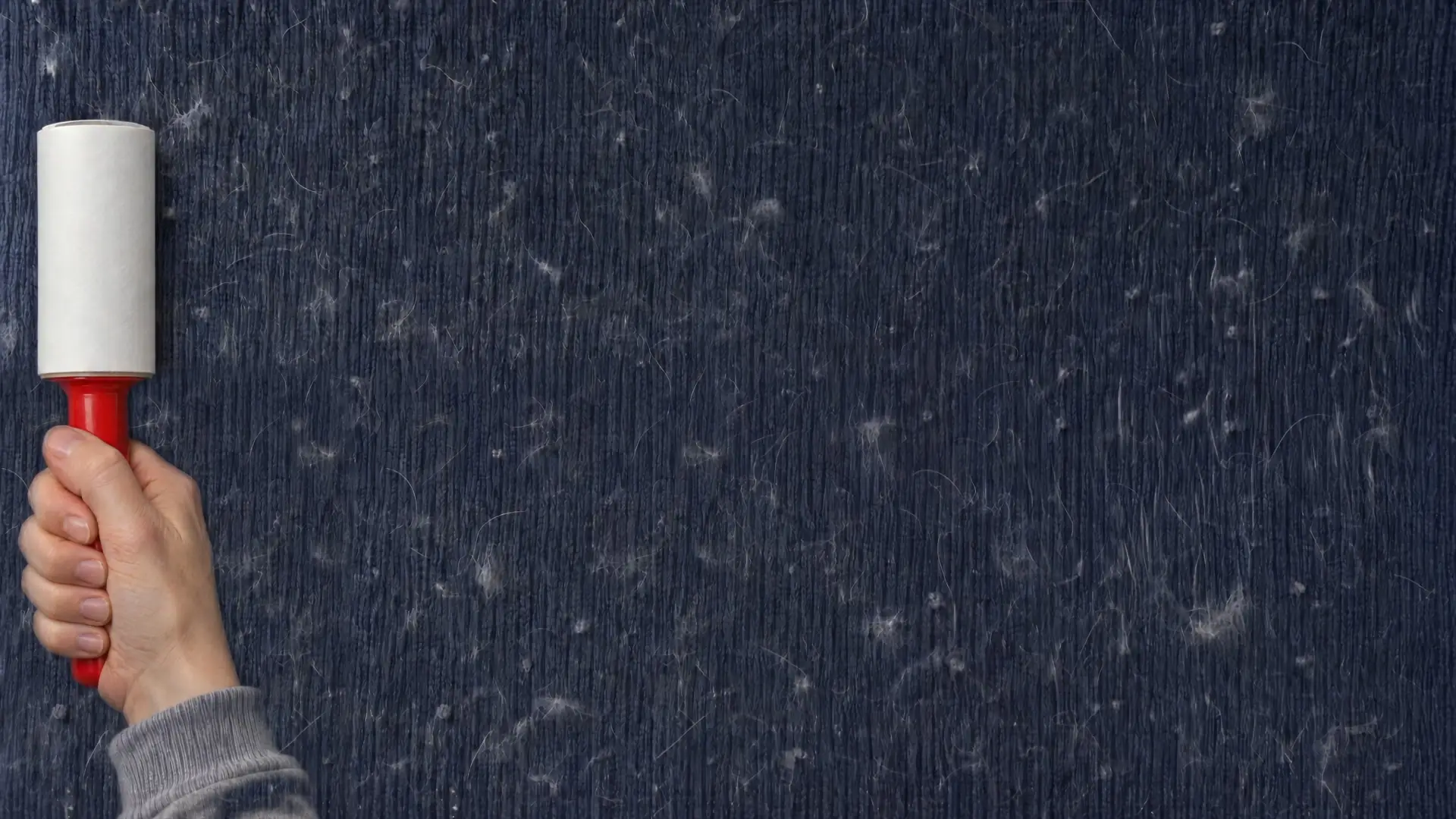
The mark
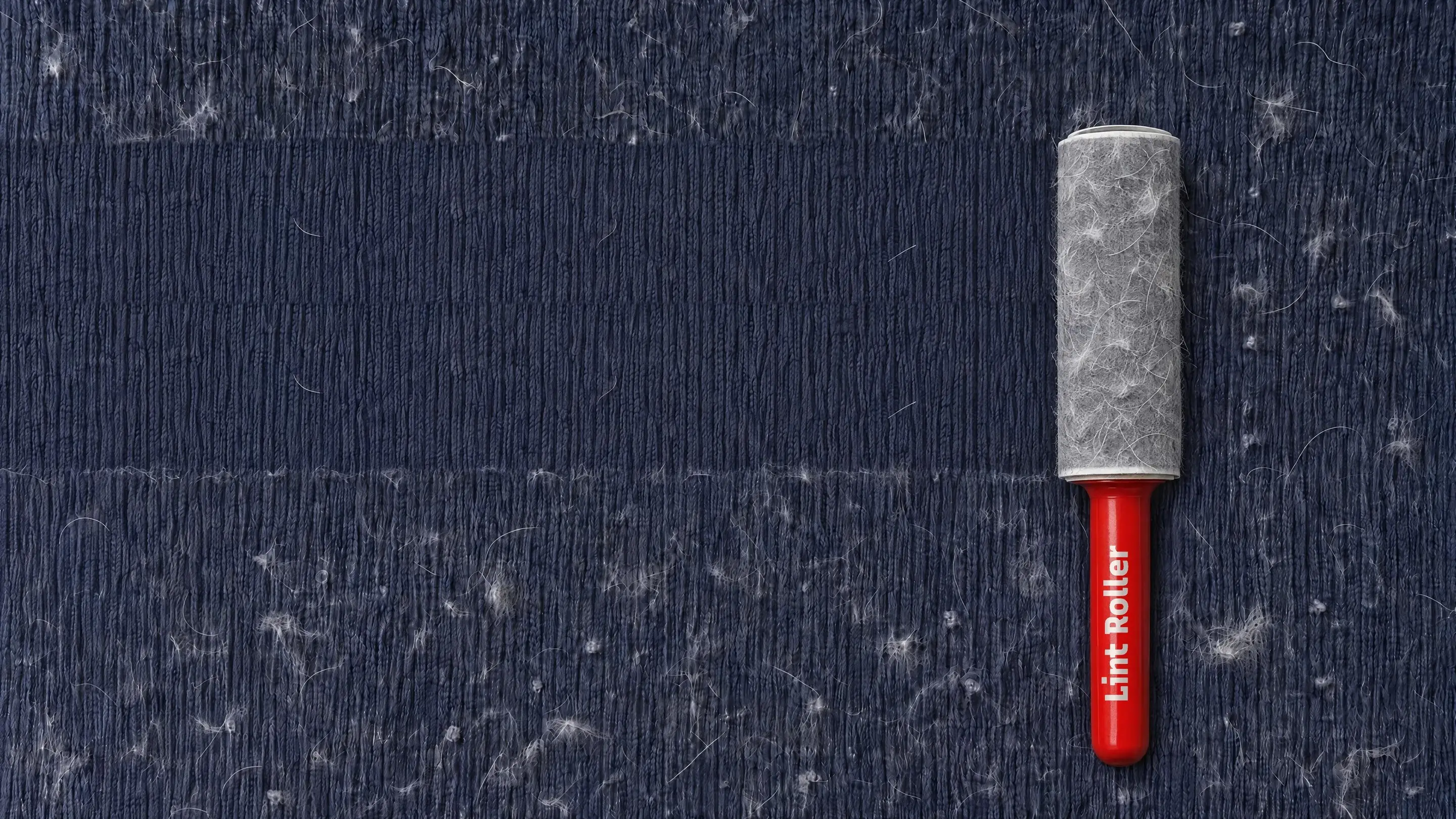
The clean stripe. The surface is covered in fuzz and the name sits in the one band a roller has just left. The clear space is the logo.

The type
Recursive, one family that runs from loose and slanted to upright and exact. Headlines arrive loose and are rolled tidy. The code face and the talking face are the same family.

It’s just covered in fuzz.
The color
Sweater navy, because that is where lint shows. Sheet white. One handle red.
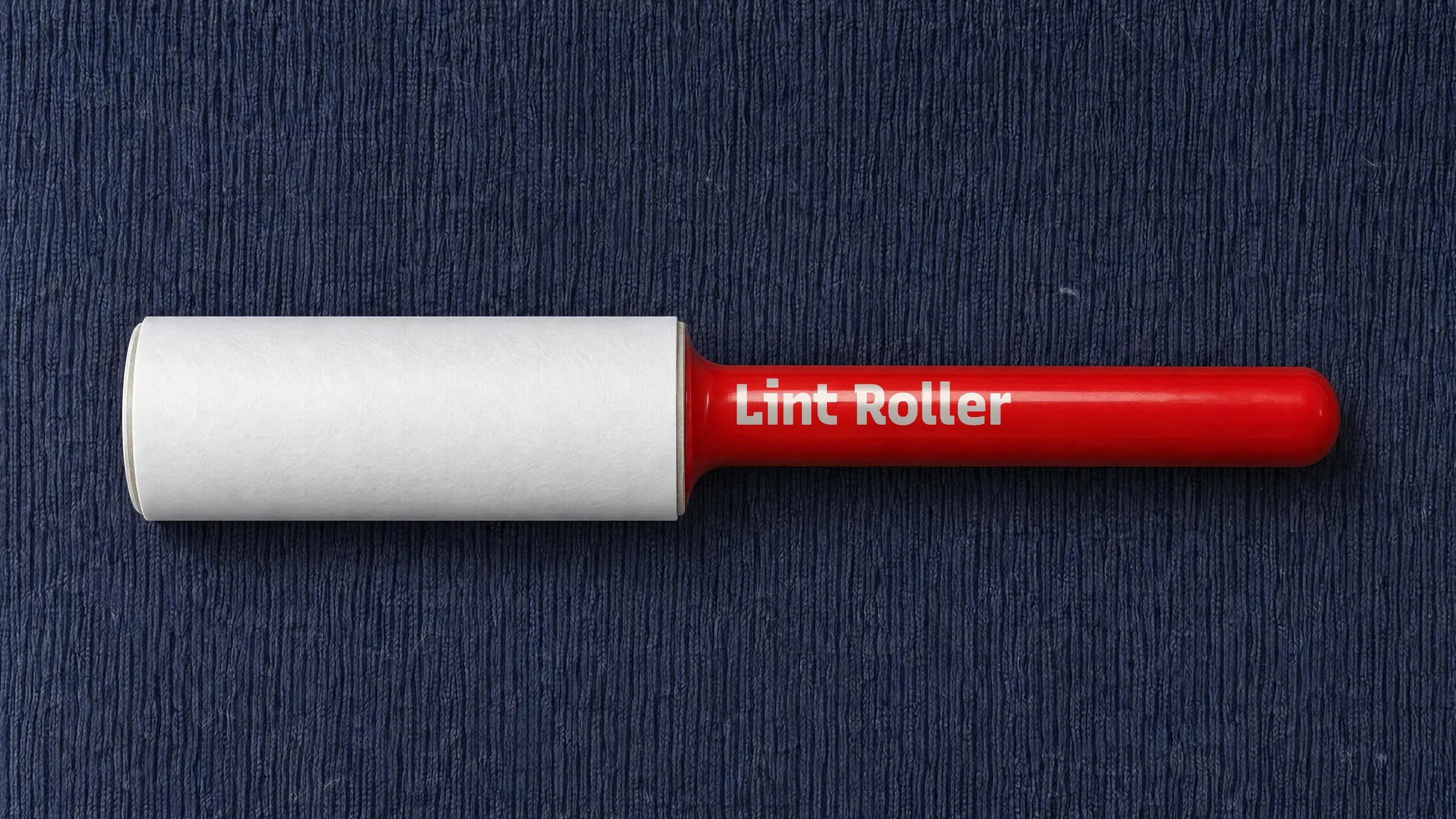
- Sweater navy#1B2947
- Sheet white#F4F2EC
- Handle red#E0382B
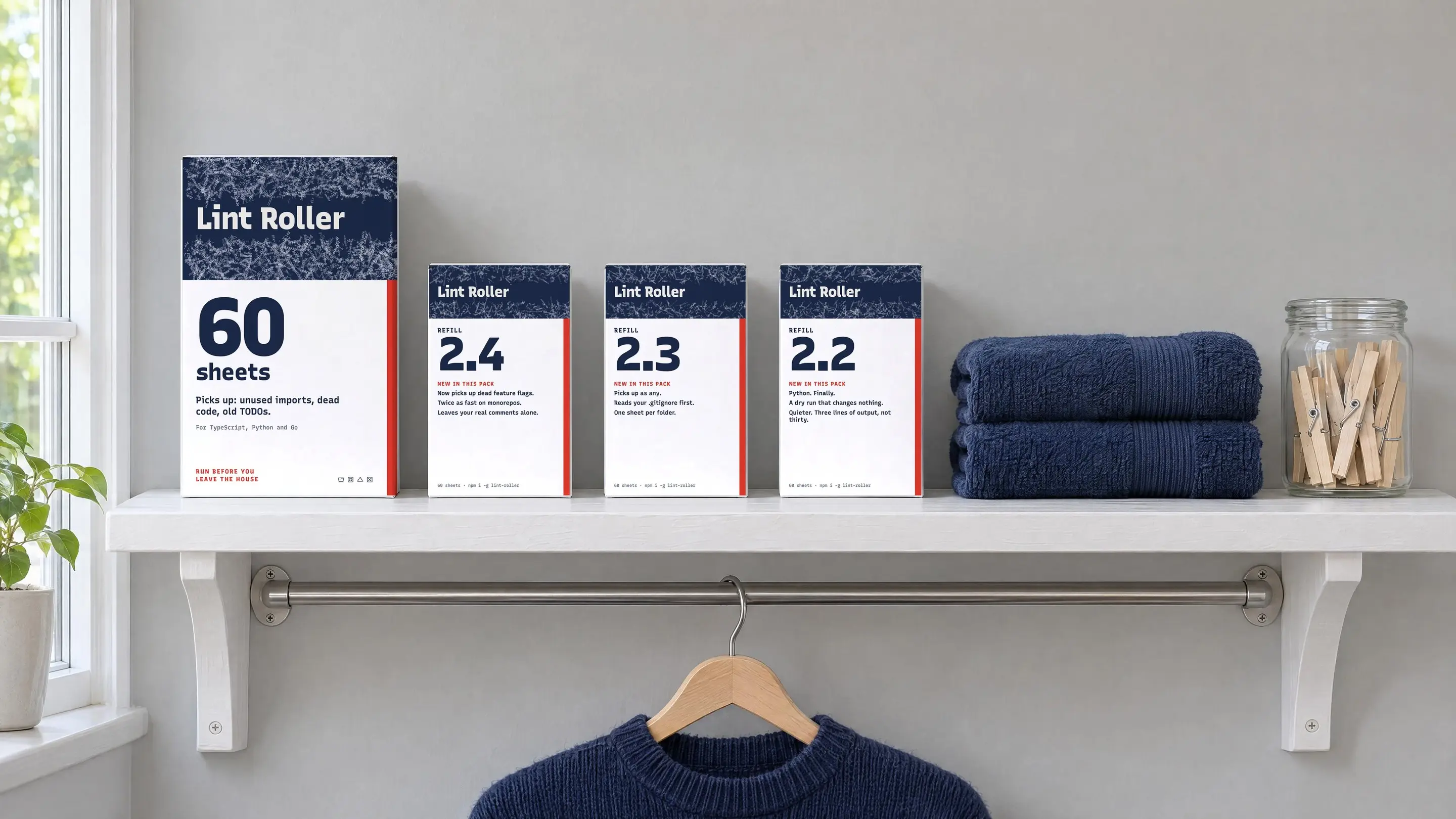
Sold from the laundry shelf.
A pack, and a refill for every release. The release notes are on the front.
Care instructions for code.
Eight symbols in one stroke, borrowed from the label inside a sweater. They are on the back of every pack and at the foot of every page of the docs.
- Run on every commit.
- Do not run on generated files.
- Never bleaches. It takes only what nobody will miss.
- Dry run first. Nothing changes until you say.
- Then peel to apply.
- Does not iron. Your formatting is your own.
- Look over the sheets by hand.
- Hang up old TODOs: ninety days, then they go.
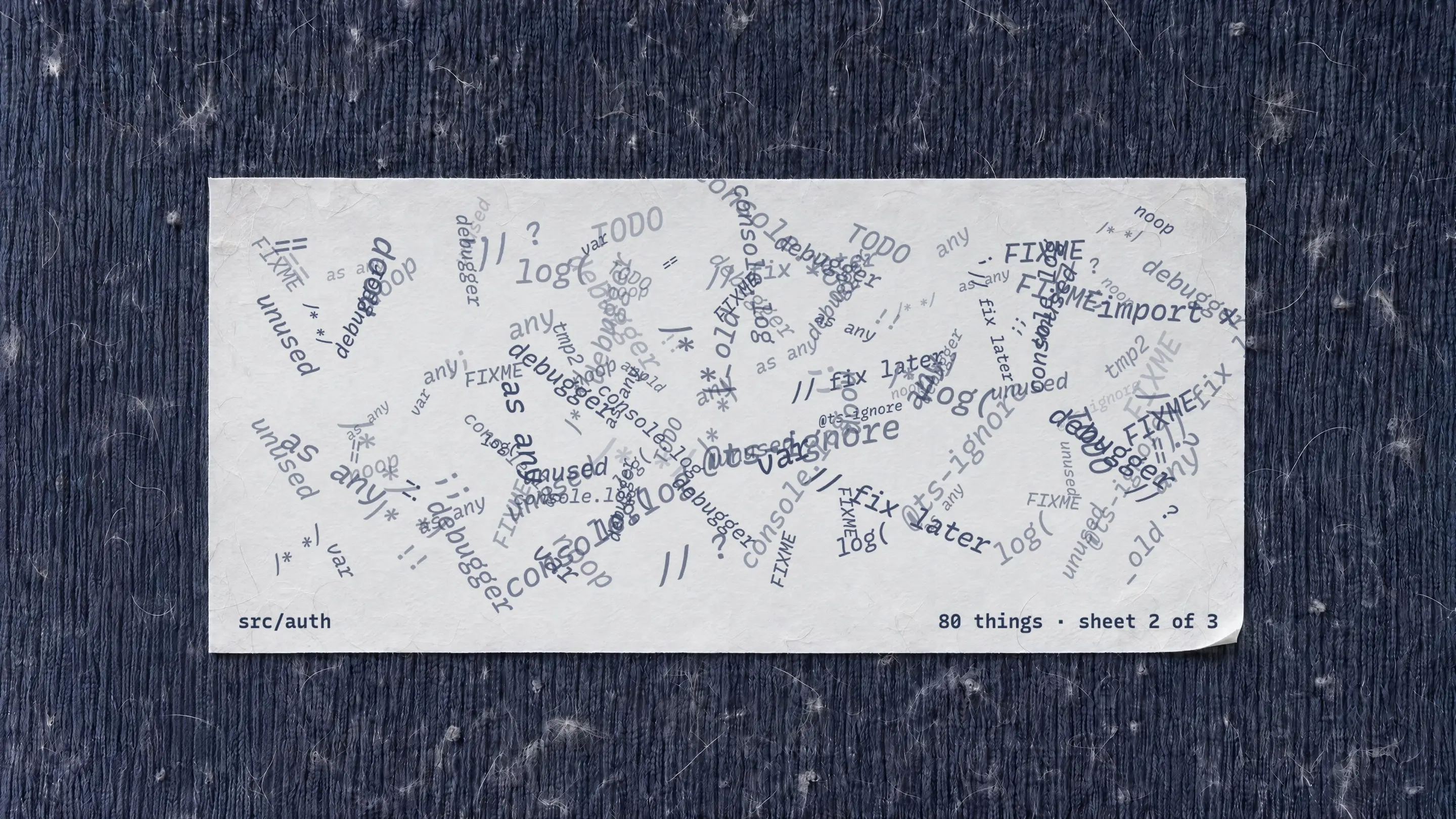
The fuzz is real.
Every speck is a real line the tool took out: a stray semicolon, a TODO, an any, a console.log. After each run the report is a used sheet, and you can read what stuck to it.


Inside the terminal, nothing cute.
“I read that output forty times a day.”
Mags Olsen, who built Lint Roller on weekends.
Around the tool.
The docs, the stickers, the shirt.
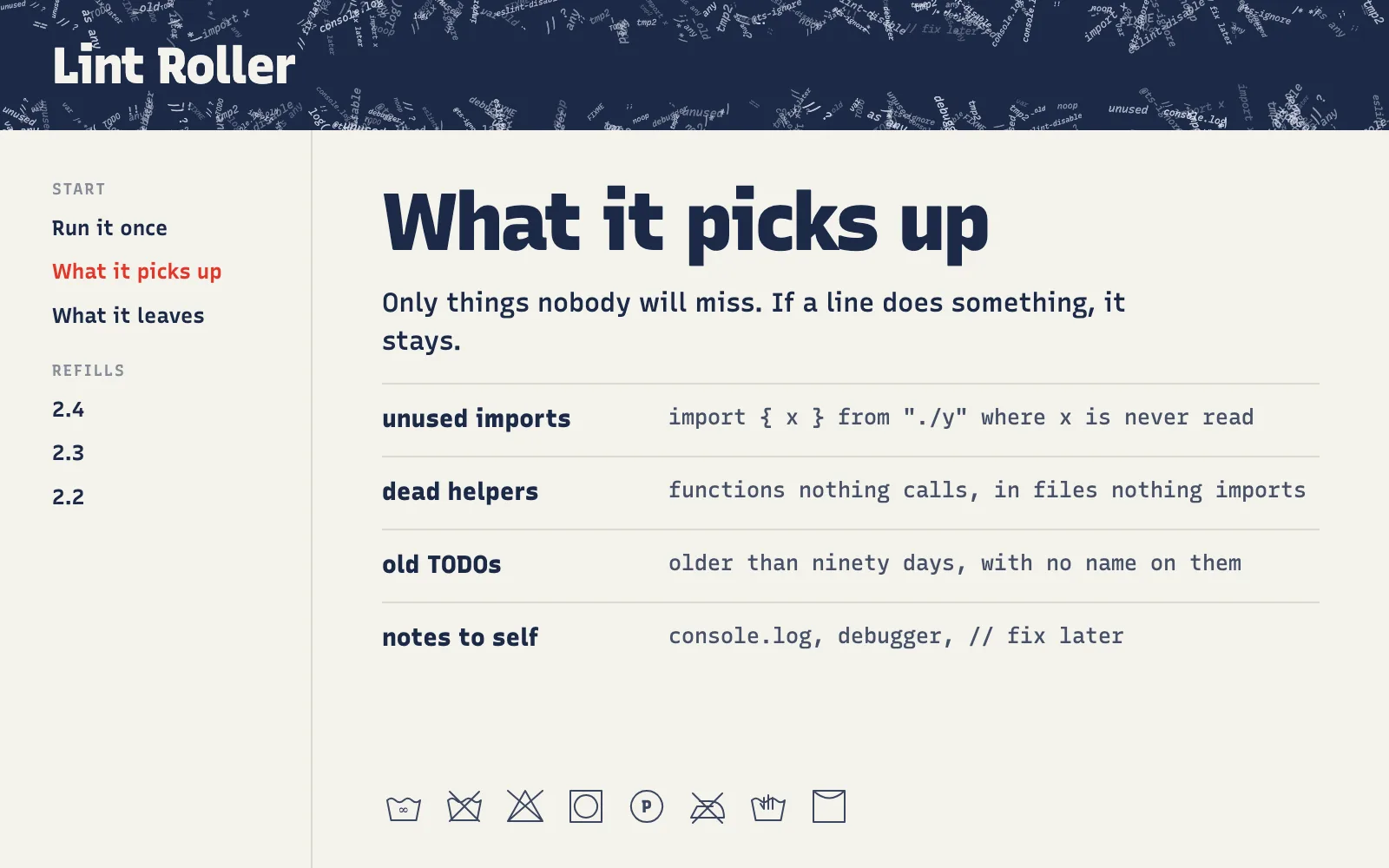
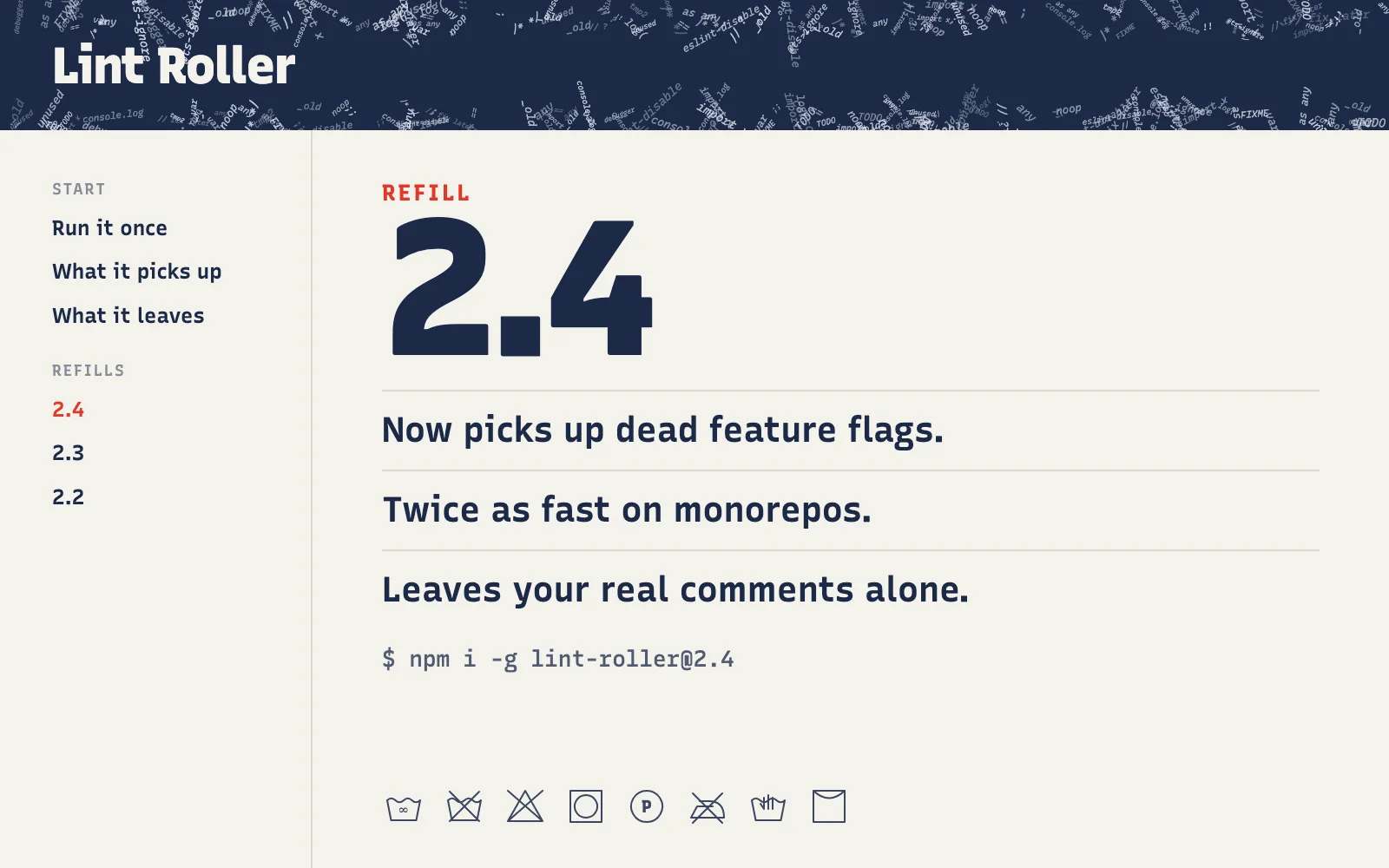
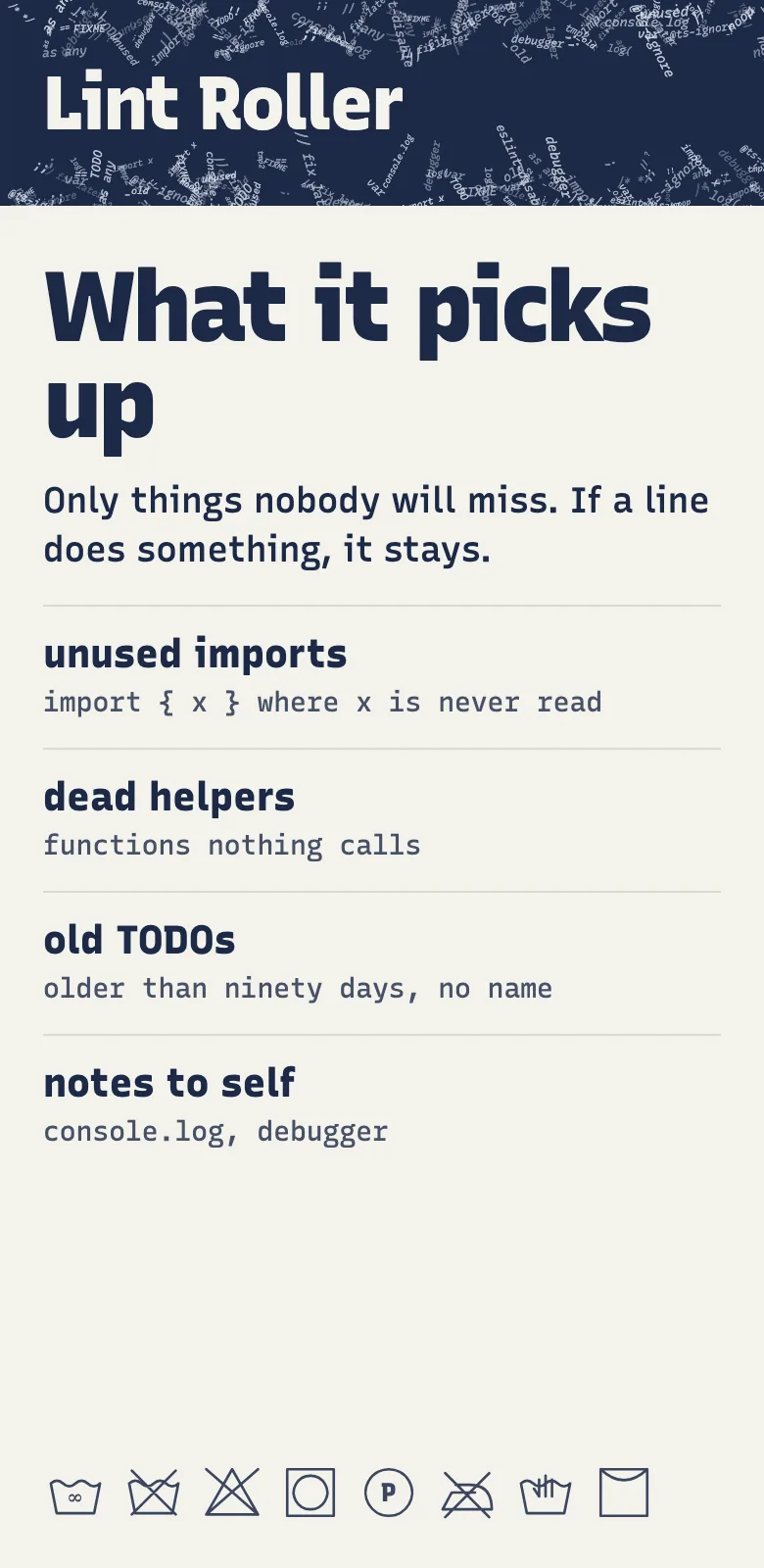
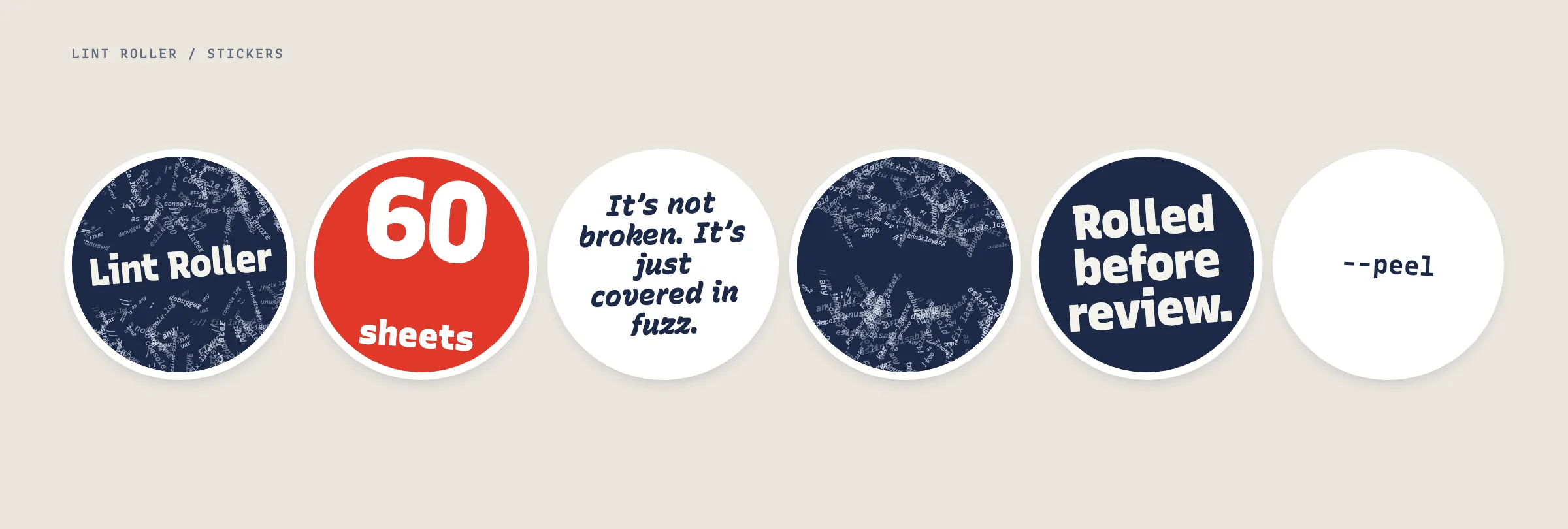
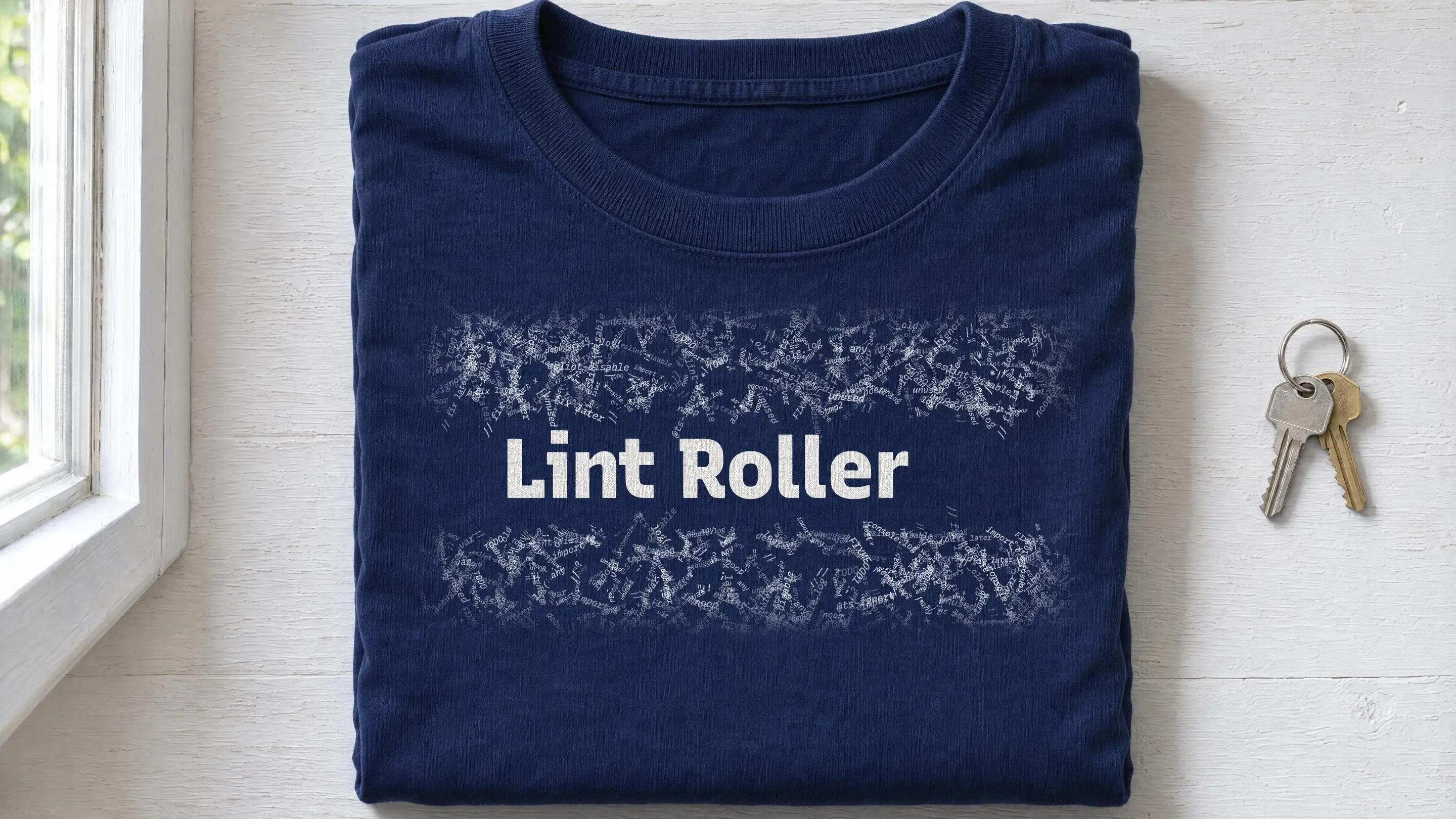

Everything, on one sweater.
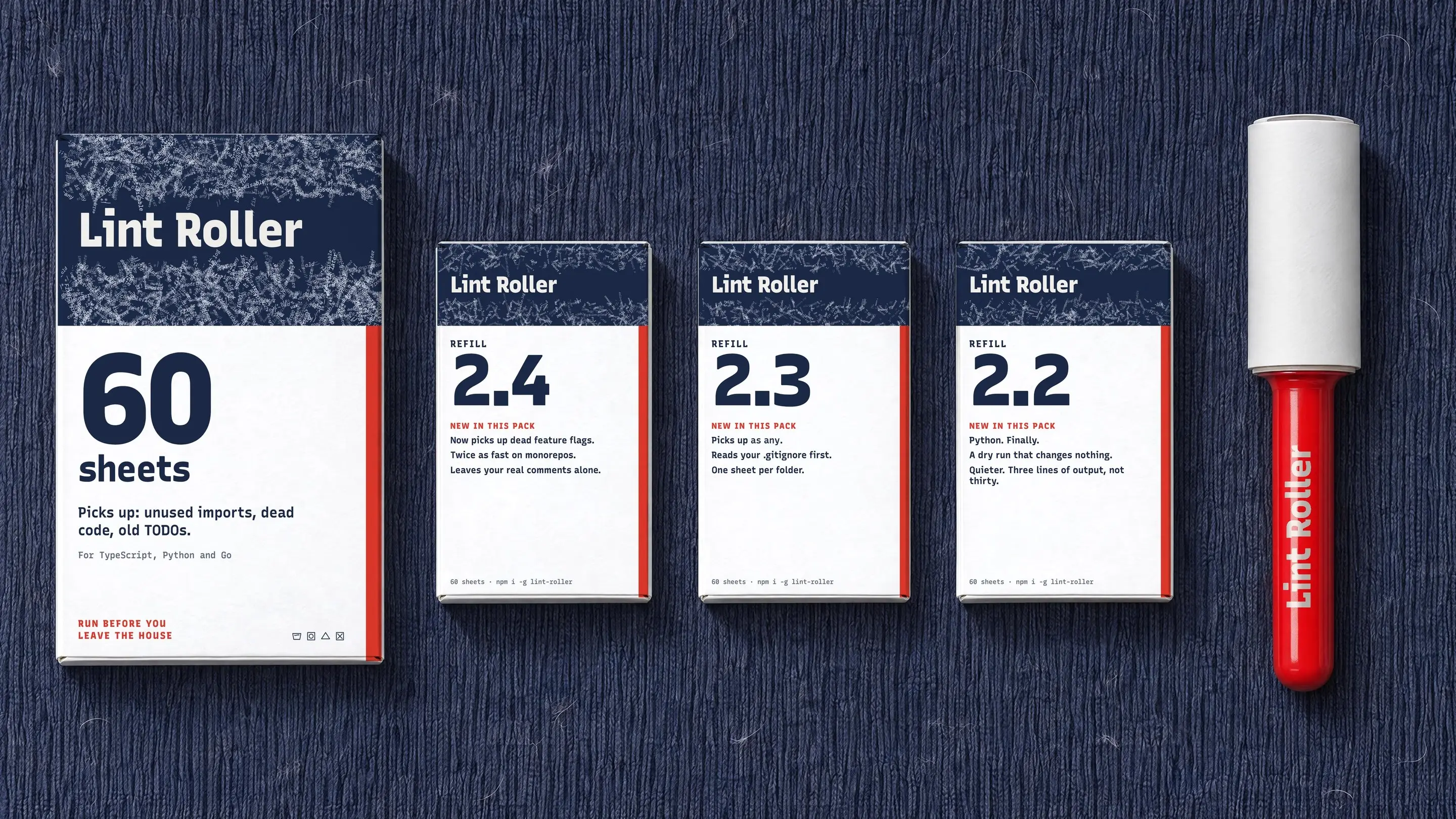
We proposed. Mags decided.
At one end of the line, a tool that looks like every other tool. At the other, a lint roller on the desk.
We proposed
The laundry shelf everywhere, the terminal output included: rolled headings, a sheet counter, a little fuzz on every line.
Mags argued
“Nothing cute inside the terminal. I read that output forty times a day.”
Mags decided
The brand lives around the tool. The tool stays quiet. We kept the one thing she liked from our pitch inside it: the last line says how many sheets it used.
Teams started paying in the first month. The roller on the desk became how people recommend it.
Set in Recursive, an open typeface. Every speck is real.